

A concrete sidewalk looks simple: a strip of concrete a few inches thick. But anyone who has walked an old Cincinnati street knows how often they crack, tilt and trip people. Most of those problems start underneath, in the ground, the stone and the drainage.
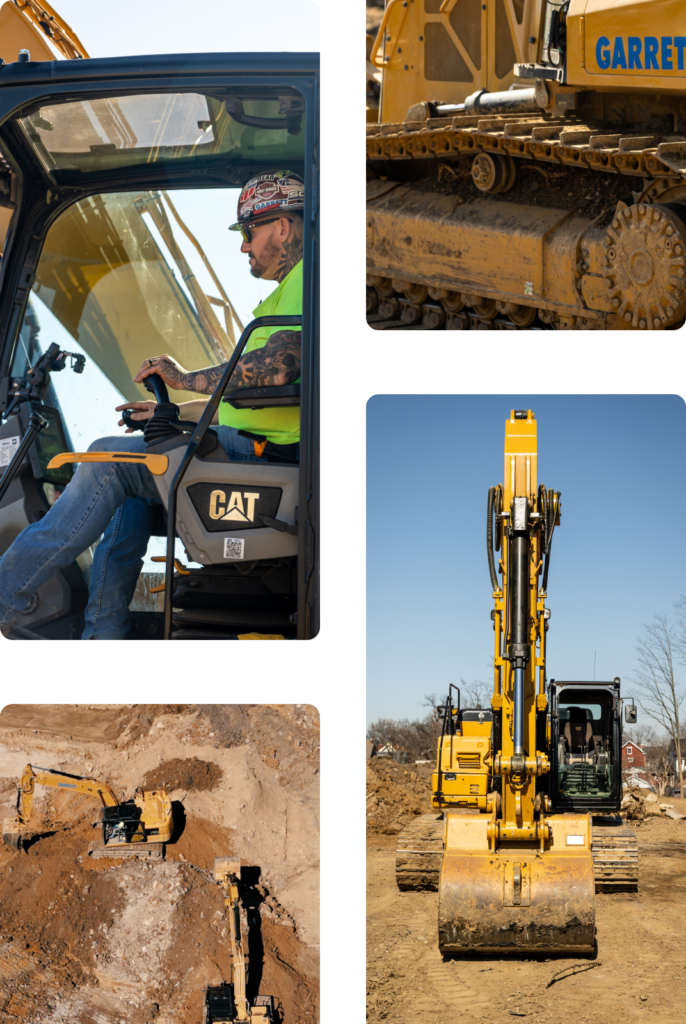
We’re Garrett Excavating, an excavating contractor in Milford. We don’t pour concrete. We do the dirt work and base prep that comes first, for homeowners and on commercial and subdivision projects where we work alongside the concrete subs. Here’s what you should know before a sidewalk goes in.
Why Sidewalks Fail
Settling. Soft soil, loose fill or old root zones compress over time, and the slab drops.
Heaving. Clay soils hold water. When that water freezes, it expands and pushes slabs up, especially in Ohio’s freeze-thaw cycles.
Washouts. Water running under or alongside a walk carries soil away and leaves voids.
Roots. Tree roots left in place, or a walk placed too close to a tree, will lift slabs.
The common thread is the base. Good concrete on bad ground still cracks.
Step 1: Plan the Route and the Water
Before digging, figure out where the walk goes and where water will go. A sidewalk should drain water off its surface and away from the house. It shouldn’t become a dam that pools water against the foundation. We look at the existing slope, downspouts and low spots, and plan the grade before anything is removed.
Also check the rules. Public sidewalks along a street are usually governed by your city or township, which may have its own width, thickness and permit requirements. Call your local office first.
Step 2: Remove and Excavate
Old concrete, pavers, sod and topsoil all come out. Topsoil is full of organic material that breaks down and settles, so it doesn’t belong under a sidewalk. We dig down to firm subgrade at the depth needed for the stone base plus the slab, and cut out any roots in the path.
Step 3: Compact the Subgrade
The exposed soil gets compacted. On bigger areas we proof-roll to find soft spots, and anything that moves gets dug out and replaced. Skipping this step is one of the most common reasons walks sink.
Step 4: Place and Compact the Stone Base
A layer of crushed stone, usually #304 limestone in our area, goes down and is compacted. It spreads the load, gives the concrete an even surface to sit on, and lets water drain instead of soaking into the clay. Depth depends on the soil and the specs from your concrete contractor or the city. Stone is compacted in lifts, not just dumped and raked.
Step 5: Final Grade
We bring the base to the final grade with the right slope and leave it ready for the concrete contractor to set forms. From there, your concrete contractor handles forms, reinforcement, pouring, finishing, control joints and curing.
When to Bring In an Excavator
A small walk on good ground might not need heavy equipment. But it’s worth calling an excavating contractor when:
– You’re removing a lot of old concrete or a full driveway and walk together.
– The ground is soft, wet or full of roots.
– Water is pooling near the house and the grade needs fixing.
– The sidewalk is part of a bigger project like a new home, addition, driveway or subdivision.
FAQ
Do you install concrete sidewalks?
We do the excavation, grading and stone base. The concrete is placed by your concrete contractor. On commercial and subdivision work, we coordinate with the concrete subs.
How thick should the stone base be?
It depends on your soil and the specs from your concrete contractor or city. We’ll check the ground and build to spec.
Can you fix drainage while you’re at it?
Yes. Grading, swales and drains are a big part of what we do.
Can you remove my old sidewalk?
Yes. Break-out and haul-off are part of our base prep work.
Get the Ground Ready
Putting in a new sidewalk, or replacing one that keeps cracking? Call Garrett Excavating at (513) 905-9916, Monday through Friday, 8 AM to 5 PM. We’ll get the base right so your concrete lasts.